
Category: Omega

Tags: , , , ,

Collecting Vintage Omega Watches

Collecting Vintage Omega Watches   omega

Introduction

A little while back I wrote a defense (or justification, depending on how you look at it) of vintage watch collecting for aBlogtoRead. Following up on that, I’d like to share a bit more of my passion for all timekeepers vintage by presenting a “state of the market” article. My personal interest, and the bulk of my collection, is in Omegas made before the 1980s, so I shall cover that which I know best.

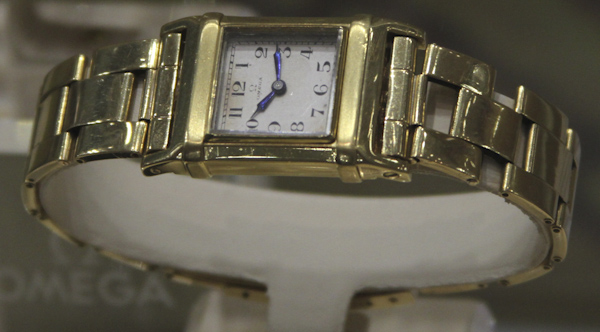
[editor's note: To complement Jason's article and selected images, I am also including pictures I took while at the Omega watch Museum in Switzerland. Among those images you'll find some great shots of vintage Omega timepieces, as well as representations of models that are discussed below. I hope you enjoy them as much as we do.]

I’ve long felt that Omega, while well known and very respected, has been a relatively under appreciated brand among vintage collectors. That’s not to say they aren’t popular as collectibles, just that they are undervalued. Vintage Omegas are exceptionally good timepieces that are reasonably priced in today’s market; even the most valuable and rare Omegas won’t compete with the likes of Rolex and Patek, even if they are comparable in quality. While I feel this is a real shame, considering how good these watches are, it does mean that collectors have access to a wide variety of interesting pieces for reasonable money. It’s also a great introductory brand for a budding collector – they are easy to find, easy to service and get parts for, are reliable and well made, and generally nice watches to wear on a daily basis.
Collecting Vintage Omega Watches   omega

The Brand and the History

Omega began as an assembly “Comptoir” in La Chaux de Fonds, Switzerland. Louis Brandt founded the company in 1848 as a workshop that assembled pocketwatches and distributed them in several countries. The name Omega didn’t come about until 1894, by which time Louis’ sons Cesar and Louis-Paul had converted the workshop into a small manufacture in Bienne. Omega wasn’t a brand, initially; it was a movement calibre – a pendant-wound pocketwatch calibre that utilized streamlined construction techniques and interchangeable parts for a reliable and easy-to-service mass-produced design. Soon Omega calibres became a worldwide success, so much so that all watches produced by the company were branded Omega from 1903 onward. The Omega calibre was so successful and well designed that it was produced (for pocketwatches) until 1967!

Over the years Omega has been known as a brand that produced reliable and accurate watches for a wide market. In the early decades they were leaders in the production of class-winning chronometers, in both pocket and wristwatch calibres. Before the abolition of competition in chronometer trials in the 1970s, Omega was a record holder in several categories, and was one of the largest producers of mass-produced series chronometer movements in the world (until Rolex took that crown). They were also well known for being the official Olympic timekeeper from 1932 onward, and created many innovative sports timing mechanisms over the decades.

The most significant and best-known Omega models emerged in the 1950s – the Constellation chronometers, the Speedmaster chronographs, and the Seamaster dive watches. Today these three models are the top level of Omega collecting. The company’s real claim to fame was the selection of the Speedmaster chronograph by NASA for use in the space program in 1965 after a series of grueling tests. In 1969 it became the first watch on the Moon, worn by Buzz Aldrin on the surface (Neil Armstrong left his in the lander as a backup clock, a testament to how much faith they put in the Omega). Since 1969 the Speedmaster Professional (as it became known after it was selected by NASA) has become the best known, most collectible and most desirable Omega out there, thanks in no small part to Omega’s continuing marketing touting their participation in the Apollo landings (and countless limited editions to honor the fact).

Collecting Vintage Omega Watches   omega

Significant Models

Up until the 1950s the most popular Omegas featured the legendary 30mm hand-wound calibres. 30mm denotes the size of the movement, not the case. Produced in the millions, the 30mms (30T2 and 2XX series calibres being the most common) were robust, reliable, accurate, and easy to service. They formed a solid base for chronometer modifications as well, and today chronometer variants (with unique balance assemblies, indexes, and finely-finished gears that set them apart from base calibres) are the most desirable.  Any 30mm is worth something. They were produced in cases that ranged from 32-33mm up to a pretty sizable 38mm (which looks even bigger due to the expansive dials and thin bezels). The larger sizes command a premium and are a bit harder to find, but are worth seeking out – they are elegant dress watches that are big enough to not feel out of place in a sea of 40mm plus designs. While fairly valuable, the 30mm variants are not that rare – again, they made millions of them over the decades. Finding a good, original one is not that difficult, but beware of scores of dodgy refinished dials and worn-out cases. It’s also a movement that is prone to neglect as it can run for years without attention, which means many will need a service pronto.

From the 1950s onward automatic calibres became popular, starting with the famous “bumper” calibres. Early automatics had a rotor that rotated a partial circle, not a full rotation, and were buffered by a blocking bridge with small springs on either side. When the rotor swings back and forth it bounces off the springs, hence “bumper”. This “Harwood” system, named for the inventor who developed it, was used by many brands until the 1960s due to the fact that Rolex held the main patents on the 360-degree rotor system. The most famous of the bumpers was the first generation Seamaster introduced for the 1948 London Olympics – at the time it was considered a sporty watch, with thick lugs and a water resistant case. Today it would be considered a dress watch. Generally they are not as collectible as earlier 30mms but have their own following. Up until the 1970s Seamasters were generally dressy designs, more akin to the modern Aqua Terra than the Seamaster Professional, with a few notable exceptions.

Collecting Vintage Omega Watches   omega

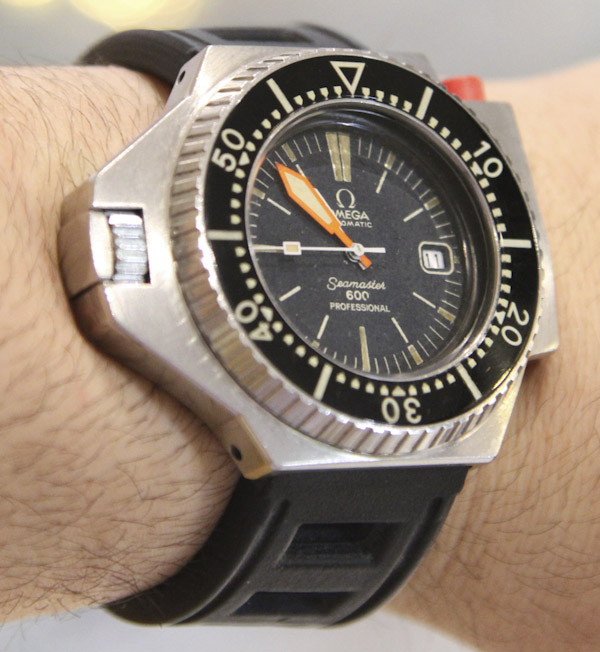
In 1957 the Seamaster 300 was released, a proper dive watch with a robust automatic movement (5XX series calibres), highly water resistant case (200 meters, despite what the “300” moniker suggests), highly legible luminescent dial and hands, and a rotating graduated bezel. It was a competitor to the Rolex Submariner, though it never achieved nearly as much success or collectibility. Early one had a narrow bezel, later models sported a bigger version with a luminescent acrylic insert. Today it is a popular but rather uncommon collectible, and highly wearable – it clocks in at a very modern 42mm, which was gigantic for a watch of this era, and considerably bigger than the 39-40mm Submariner. These command higher than average prices due to their rarity and style, but they never come close to Rolex territory, so it’s an affordable choice for a sexy vintage diver that is big enough to wear everyday. Speaking of big, there is also the Ploprof Seamaster 600 (not to be confused with the Seamaster 600 dress watch) that has found new popularity since it was re-released by Omega several years ago. It’s a massive, purpose-built diver with a one-piece case and locking bezel with a button release. Some smaller (but still sizable) divers were released following the Ploprof, including the “SHOM” models. These have a dedicated following, but prices remain accessible. Fun fact – the Seamaster Planet Ocean is a recreation of the first generation 1957 Seamaster 300, right down to the broadarrow hands, Arabic numerals, and thin bezel insert.

Also released in 1957 was the Speedmaster chronograph, the king of vintage Omegas. The first generation (called “broad arrow” due to its wide arrow-tipped hands) had an engraved metal tachymetre bezel and a 40mm “straight lug” case; by the 1960s they had adopted the style we recognize today (because it is still in production after over 50 years), with white-painted baton hands, black printed tachymetre insert, and a 42mm case with crown guards and twisted lyre lugs. From 1957 to 1968 they utilized the 321-calibre movement, a column-wheel chronograph based on a Lemania design; from 1968 to present they have used the 861-calibre (later 1861) which has a shuttle-cam system and more refined design. The 321 models are the most desirable, more so if they are straight-lug  or broad-arrow models. 861s are far more common and make a bargain purchase for a vintage hand-wound chronograph, often coming up for under 2 grand for a good example. You couldn’t buy a BEZEL for an equivalent Rolex Daytona at that price, and the Daytona is a downright puny 37mm. Everyone needs to have a Speedmaster in their collection at some point, it is one of the best classic chronographs out there and its history in the space program means it is a great conversation starter. This watch was worn on the MOON dontchaknow…

Collecting Vintage Omega Watches   omega

Yet another 1957 release – the Railmaster anti-magnetic models. Short lived and never particularly popular, the Railmaster has become a pretty serious collectible in recent years. Like any good collectible, it was a flop and was produced in limited numbers. The Railmaster features a manual wind 2XX calibre (30mm) movement encased in a Faraday cage of soft iron, with a soft iron dial as well, to shield it from heavy magnetic fields. It’s a concept that was also used by IWC with the Ingenieur, and Rolex with the Milgauss. The Railmaster shared styling with the Ranchero, featuring a black luminescent dial with broad-arrow hands on most models. It came in a 36mm stainless steel case. Expect to pay big money for a clean, original Railmaster – anywhere from $7000 up. Some have cleared $10 or even $20K at auction.

Two significant models that are building a serious following are the military-issue 1945 WWW, RAF ’53 and the very rare RCAF chronograph. The RAF 53 was made for a single year for the British air force, and features a 30mm manual wind calibre with centre seconds in a 37mm steel case with fixed lug bars. Dial is a simple black luminescent affair with Arabic numerals and broad sword hands. An earlier series was issued during the Second World War (1945) that had sub-seconds at 6 oclock and a 35mm case. These models are commonly known as W.W.W.s – Wrist Watch Waterproof, as per the military contract. The RCAF chronograph was produced for the Canadian air force, in two issues (1960 and 1962). They were mostly unmarked, featuring a plain white dial with no indication it was made by Omega until you opened it up and checked the movement (some dials do have an Omega logo near 12 oclock). The 1960 edition was 36mm, the ’62 38mm. Again, steel cases with fixed lug bars, as per usual military specs. These models are becoming increasingly sought after, but beware – fakes and redials abound!

Collecting Vintage Omega Watches   omega

Then we have the Constellation, Omega’s evergreen chronometer series. Beginning in 1952 as the “Globemaster” (because of legal wranglings over the Constellation name), it was an elegant dress model in steel or gold with certified chronometer movements. The earliest models featured modified bumper calibres (3XX series), which were replaced by the now legendary 5XX series automatics. The 5XX calibres are some of the finest movements ever designed, with superb performance and reliability. These are watches that can run to COSC specs after 40 or 50 years (provided they are serviced regularly). There are a many Constellation variations across the years, but generally the most sought after are the famous pie-pan dial examples (so named for their faceted convex dials) in solid gold, particularly if they have the original gold bracelet. Extreme caution must be exercised, as the Connies are some of the most faked vintage Omegas out there. A casual perusal of eBay will reveal a dozen fake or franken Connies at any given time.

Two lesser-known models that offer a very reasonable entry point for Omega collecting are the Deville and Geneve dress models. The Deville began as a Seamaster model with a monocoque (one piece) case to increase water resistance. The Geneve began as a high-spec dress watch, but in the 1960s it became an entry level model. By the 70s it was an inexpensive model that used older movements (which is a plus, because the 5XX calibres they used for many years are very good). Devilles are generally very classic with narrow bezels and thin lugs, while Geneves are a bit chunkier – later Geneves became sporty watches with beefier cases, and were available with an integrated bracelet. The integrated bracelet versions are one my personal favorites as they have a Gerald Genta-esque look, along the lines of a Royal Oak or a Nautilus – but for a fraction of the price of those models.

There are many more variations out there that would warrant attention (but I’m here to write an article, not a book) - best thing is to dive into the forums and FAQs and start researching to find the models that appeal to you. Some others worth checking out would be the Cosmic triple calendar, the Speedmaster Mark series and 1970s bullhead chronographs, the Megaquartz series, the Chronostop and Memomatic, DeVille and Seamaster chronographs, the Dynamic, and the F300hz tuning fork models.

Collecting Vintage Omega Watches   omega

What to Look For, and What to Avoid

When buying vintage from any brand originality is key. You want a clean watch that has not been molested – refinished or replaced parts are anathema for vintage collectors. The biggest problem with Omegas, particularly dress models, is the prevalence of refinished dials. Some are quite true to the original design, others are sloppy, some are downright fraud (there is a trend lately for cheap dress models re-dialed to look like military models, or tarted up to look like a much more valuable Rachero or Railmaster). The only way to tell what is original and what is redone is through lots and lots of research. Some redials are very good and hard to spot without an expert eye. In general if it has an expected amount of patina it is likely legit, but if it is pristine its probably redone.

Box and papers is a great bonus, but doesn’t add a lot to the value (unlike Rolex or Patek). B&P is extremely rare with Omegas in general, and it’s not that hard for someone to get a set of blank papers to go with any watch - serial numbers weren’t recorded for the most part, and the standard warranty card was a generic slip that was filled in by the retailer at the time of purchase. The only exception is chronometer models, which were accompanied by a timing certificate when they were sold. So don’t pay a big premium for B&P, it’s not worth any more than 10% over market value.

Collecting Vintage Omega Watches   omega

Original bracelets are a big plus; they are scarce and hard to find in good condition. Some popular bracelets (like the Speedmaster 1450) can fetch up to a thousand bucks on their own! Omega has been producing new replacement bracelets for older models for many years, so odds are that a “new old stock” bracelet is just a newer replacement item you could order from Omega at any authorized dealer. Case in point – the Speedmaster 1171/1 or the Seamaster 1380 shark mesh, which are constantly touted as a “NOS” vintage bracelet, but is in fact a new item that you can purchase from an AD. Don’t get suckered into paying big money for something that isn’t even vintage. And beware of fake bracelets – generally they have the wrong clasp codes, so doing a quick Google image search for the code will reveal if it is correct. The most common fake bracelet is marked 1286/249.

Serial numbers are always present on the movement but almost never on the outside of the case. The model number is usually engraved on the inside of the caseback along with metal hallmarks (though some national-production cases made in high-import-tariff countries may not have model numbers). You can find charts to date the movement to an approximate year on the Omega website. Papers are almost never marked with the serial (aside from chronometer certificates) because checking the number would require removing the caseback.

Collecting Vintage Omega Watches   omega

Original crystals are highly prized, and quite easy to identify. From the 1950s up to present, Omega always engraves a tiny Ω on the underside of their plastic crystals (but not their sapphire or mineral glass items). It can be found at the dead center of the crystal, above the pinion of the hands. Early versions up until the 90s were quite fine and are hard to see without a loupe; these have an old style logo, with a tall profile. Later crystals and modern service replacements have a much more prominent logo that can be seen with the naked eye and features a rounder, fatter design. It’s a quick way to see if the crystal is original, and if so whether it is vintage or a new replacement.

The hierarchy of value for vintage Omegas goes thusly: solid gold, steel, gold filled or gold capped, gold plated. Whereas other companies might command higher values for a steel watch, it’s almost always gold models that fetch a premium when buying Omegas. Up until the 80s Omega produced a lot of gold filled or gold plated models, these are generally not very desirable unless they are in pristine shape with no sign of the base metal showing through. The rarest Omegas of all are 18k or 14k white gold models – these were produced in very small numbers over the years and fetch top dollar when they pop up. A white gold model can be worth two to four times more than the same watch in yellow gold.

Collecting Vintage Omega Watches   omega

The second determiner of value is the dial – obviously originality is important, but color is particularly prized. Black and two-tone (tuxedo) dials were rare up until the 70s on dress models, usually made for special order only, so black-dialed Constellations and similar watches will fetch a significant premium. Silver or champagne coloured dials are the most common. As a result, black redials are extremely prevalent. Many less-than-honest sellers will have a dial refinished to black to raise the value. Lately there has been a spate of colored “exotic” dials coming out of Southeast Asia, mainly bright blue, green and red. While there were a few extremely rare exotic dials produced over the years, the vast majority you will encounter are modern redials. The same goes for exotic color sport models - blue or white dial Speedmasters for example. New replacement dials are available from Omega in various colors, so technically it might be a legitimate dial but won’t be original to the watch, nor would it be vintage. Watch out for giveaway descriptions like “NOS dial”, “professionally refinished”, “restored dial” etc.

Chronometer models always fetch more money than standard models – in the case of Constellation almost all were chronometers (aside from some ladies models and ultra-thin automatics), but there were small runs of chronograph and Seamaster automatic chronometers over the years. Rarity means value.

Collecting Vintage Omega Watches   omega

When talking about rarity in Omegas, everything is relative. A rare Patek will be one of perhaps 5 or 10 examples, a rare Rolex one of a few hundred. A rare Omega is in the thousands – with millions of watches produced over the decades, something that was made in a run of 20 or 30 thousand pieces is relatively uncommon compared to a series of several hundred thousand. So when someone touts his or her particular watch as “rare” don’t expect it to be one of a handful that will never come up again. It’s more likely just an uncommon model that the seller didn’t happen to see on eBay at the time he put up his listing. I always laugh when someone claims their watch is “rare”, as it came from a batch of “only” 65 000.

The least desirable Omegas were generally produced from the late 1970s to early 1990s. In the 70s the quartz-crisis put Omega on the verge of bankruptcy. Quality went downhill fast. The 1980s were a low point in Omega design, and most watches produced during this era were bland quartz models with little to distinguish them from the crowd. The exception would be the Speedmaster Professional, which continued more or less unchanged through to the present, and some early Seamaster “pre-Bond” automatics that still have fans. My advice would be to focus on the pre-1975 period. You’ll find lots of dirt cheap, ugly Omegas from the 1980s - they really aren’t worth considering unless you really adore a particular model.

Collecting Vintage Omega Watches   omega

Collecting Vintage Omega Watches   omega

Fakes, Frankens and Frauds

Like anything else that is desirable, fakes and cobbled-together watches abound. The most popular outright fakes are the Seamaster 300 and Constellation models. There are a number of “tells” that can give them away, so research and due diligence is key when looking at these models. A genuine calibre is NOT an indicator of legitimacy, most fakes use original Omega movements. Some fakes are quite obvious, others are frighteningly convincing, particularly if you can’t handle the watch in person before buying. Frankens are another category, where a watch is put together using genuine parts, but not in their original state. Usually newly manufactured service parts fall into this category as well. An example would be a non-chronometer watch with a chronometer dial, or an old model that has been overly “restored” with new parts.

Collecting Vintage Omega Watches   omega

Collecting Vintage Omega Watches   omega

A note about the prevalence of so-called NOS (new old stock) watches. A company in Australia called Watchco was building “new” Seamaster models (300, Ploprof, SHOM) from original movements cased in new service parts. The movements are vintage, taken from less-desirable models (Devilles and Geneves), put into newly manufactured Seamaster cases with new dials and hands. The only thing vintage is the movement while everything else is new. They aren’t fakes, as they use genuine Omega service parts produced by the factory to repair and restore old models. If you were to trace the serial through Omega it would show that the watch was not a Model XYZ to begin with.

NOS is a misnomer, because a true NOS watch is a vintage item that was never sold or worn from new, and has been in storage for decades. What they are is refurbished with new parts. I don’t have a personal problem with these “Watchco” specials (in fact I have one, a Seamaster 300) but buyers need to be aware that they are not vintage, nor are they NOS. If you want a new-old Seamaster 300 or Ploprof you can wear every day they are great, and their prices are generally reasonable, but they aren’t collectible like an original vintage item and they have very little chance of growing in value. Think of it as a re-issue, or a resto-mod with non-matching numbers. You will also raise the ire of vintage purists who will tell you it isn’t a true vintage watch.

Collecting Vintage Omega Watches   omega

Collecting Vintage Omega Watches   omega

Omegamania

In 2007, at the height of the watch market before everything came crashing down during the recession, Antiquorum held an Omega themed auction in Geneva in association with the brand. The results from the auction were, in a word, spectacular. Watches seemingly doubled or tripled in value overnight, with many vintage pieces fetching huge prices. Some items fetched ten times their market value. Unfortunately it was a product of an inflated market and a lot of hype. The Omegamania prices were impressive, but not representative of the market in general. Things have calmed down a lot since 2007; only the finest and rarest collectibles from the top brands have maintained or gained value since 2008.

Unfortunately many collectors, particularly sellers, still reference Omegamania prices. Wouldn’t you get excited if your Constellation, which you thought was worth about one or two thousand went for tens of thousands at auction? Problem is it is still only realistically worth that 1 or 2 grand. As a result you will sometimes encounter overzealous sellers who demand exorbitant prices for something that is not particularly rare or special. Remember that Omegamania was a product of the time and the presentation, and does not represent the current market. Believe me, I wish things were that hot (my collection would be worth a lot more if they were) but they simply aren’t in today’s conditions.

Collecting Vintage Omega Watches   omega

Collecting Vintage Omega Watches   omega

Summing Up

All of this might be a bit overwhelming to the budding collector. It’s a lot to digest. The only way to really get into collecting is through copious amounts of research. The more I learn, the less I feel I really know, and that is part of the fun of collecting. The history is what I find fascinating; these are objects that are a direct link to the past, and a golden age of mechanical design that preceded the Quartz Crisis. You have to be passionate about watches and have a willingness to learn and absorb information. The real thrill in vintage watches is the hunt for that perfect example, whatever it may be.

Jason Cormier is a sales associate at Matt Baily, a luxury watch store in Montreal, Quebec, Canada.

About Ariel Adams

Owner & Editor-In-Chief of aBlogtoWatch (formerly known as aBlogtoRead.com) - the world's largest and most popular wrist watch blog. Ariel Adams also regularly contributes to other important media such as Forbes, Departures, Centurion, Tech Crunch, and more.

About the Author

, , , ,

9 comments
TylerSelph
TylerSelph

Talk about a rare Omega watch. I think I just saw one on eBay? Vintage Omega 91 diamond ladies watch. Never even seen one before. Can anyone help me identify this watch? Circa?  Was this watch mass produced, limited edition, custom made? What might it be worth? The seller doesn't know much about it. Thanks for your help...

Tyler

AnnaBonanno
AnnaBonanno

Hello Jason, I was wondering if you could help me find out about a family heirloom. Its an Omega Seamaster 18K gold watch&band. cant seem to find the information anywhere. havent had it opened yet. back of the watch is stamped 18K 790 and 0060. Back has Omega symbol & stamp (Omega Watch-O) & says "swiss made". Back also has a stamp toward lower right corner; looks like an unclosed slanted rectangle, open on the left side & peaked on the lower right corner. Inside it appears to be "AG0" with "0" being a degree sign, although hard to see. Additional engraving looks like large circle & smaller circle over bottom of it. The face is white mother of pearl with gold 3D numbers & hands. There's a small hand below them with two intersecting lines. I'm not sure if that is a chronograph or not. The face says Omega Seamaster & has the Omega 3D gold symbol above it. One dial on side of the watch. Under base of hands on face are letters but they're hard to see; look like they start with "HHN..." or "HNN...." The band&buckle are 18K 790 but has "Arbiter" engraved where it attaches to the watch. I'm writing to you because you're the first person Ive found that truly knows vintage Omega watches. The watch was passed down by a great uncle that grew up in Naples Italy and moved later in life to Argentina. Any help would be appreciated.

Eric S
Eric S

Thank you, Jason, for a highly informative and well-written article!

 JohnnyJohnnyJohnny
JohnnyJohnnyJohnny

Omega's are pretty cool. I think if I buy one it might help compensate for my very small penis. Then maybe women will stop laughing at me and I can stop giving off such a forced air of confidence that everyone knows is just desperate. I would try to buy a Hublot for this task but I cannot really afford one so I will try a vintage Omega and let you guys know how it goes.

Kris C
Kris C

Very cool. I have a high appreciation for this brand, although I'm not of the ilk that goes nuts for it either. I know forum members that would step over their mothers to own a vintage Proplof, regarldess of the fact it has all the aesthetics of a punched onion. To each his own, I firmly believe. Great write up, this should be very useful to anyone currently in, or thinking about getting into vintage Omega watches.

Kris C
Kris C

Very cool. I have a high appreciation for this brand, although I'm not of the ilk that goes nuts for it either. I know forum members that would step over their mothers to own a vintage Proplof, regarldess of the fact it has all the aesthetics of a punched onion. To each his own, I firmly believe.

Great write up, this should be very useful to anyone currently in, or thinking about getting into vintage Omega watches.

Greg S
Greg S

Fantastic article Jason, you really should consider writing that book! Cheers.

Greg S
Greg S

Fantastic article Jason, you really should consider writing that book! Cheers.

Trackbacks

  1. [...] While we tend to prefer “new” versus “old,” there is a certain charm in some vintage watches. A great brand to look at is Swiss Omega, and here is a very definitive guide to collecting the best timepieces from their past. [...]

  2. [...] While we tend to prefer “new” versus “old,” there is a certain charm in some vintage watches. A great brand to look at is Swiss Omega, and here is a very definitive guide to collecting the best timepieces from their past. [...]