
Category: Omega

Tags: , , , ,

Looking At Liquid Metal Watches With Omega

Looking At Liquid Metal Watches With Omega   omega

The modern arms race with watches isn’t about gears and pinions, but rather materials. It may appear that brands are hot on beating each others' movements but they know that such a war would be a joke. The race for the most accurate movement slowed to almost a halt when quartz watches hit the scene, and there are almost no new viable complications to be invented. The secrecy and excitement in the world of high-end watches is all in discovering, creating, and exploiting the hottest new materials.

We’ve seen this over the last 10 years more than ever. Ceramic, titanium, carbon fiber, silicium, and other new or previously under-utilized materials are more than common now. Even within those categories are new alloys, manufacturing techniques, formulations, uses, and colors. For those who only get hot and bothered by calibers, I say start looking outside the watch more often.
Looking At Liquid Metal Watches With Omega   omega

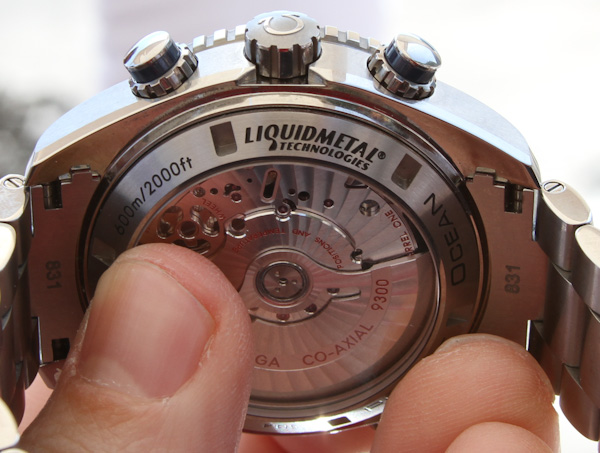
In about 2009 Omega announced that it would be using a new type of material called Liquidmetal. What arrived soon after was a limited edition Seamaster Planet Ocean with a black liquid metal dial (that I wrote about here). It seemed to be Omega’s answer to Rolex’s Cerachrom bezels. Like those of Rolex, Omega’s liquid metal watches would combine metal and ceramic. The purpose? To create better looking, more durable bezels than ever before — but is that all?

No it turns out. Omega is experimenting with dozens of applications for the special alloy. Not only for itself, but for the Swatch Group overall. So what is Liquidmetal and how did it end up in an Omega watch?
Looking At Liquid Metal Watches With Omega   omega

Looking At Liquid Metal Watches With Omega   omega

Liquidmetal Technologies is actually an American company and Liquidmetal is an alloy. I am no chemist so I won’t go into all the details here. In fact, I previously wrote an article on Liquidmetal here. It is a mixture of zirconium, nickel, and several other metals. It has the curious property of being quite elastic and has the ability to cleanly melt and become malleable. All metal can become a liquid, but Liquidmetal’s special draw seems to be the malleable nature that it takes during its liquid form.

After briefly experimenting with Liquidmetal Omega decided to license the exclusive right to use the material. I don’t know details of the agreement, but don’t expect to see Liquidmetal in watches outside Omega — or the Swatch Group. What Liquidmetal didn’t come with was the ability to industrialize the process of using it. Omega buys the alloy in rods from the US and then must do all the work themselves. The reason Liquidmetal is in so few Omega watches at this time simply comes from the fact that Omega is still working out how to manufacture components with Liquidmetal in mass quantities — again, to industrialize the process.

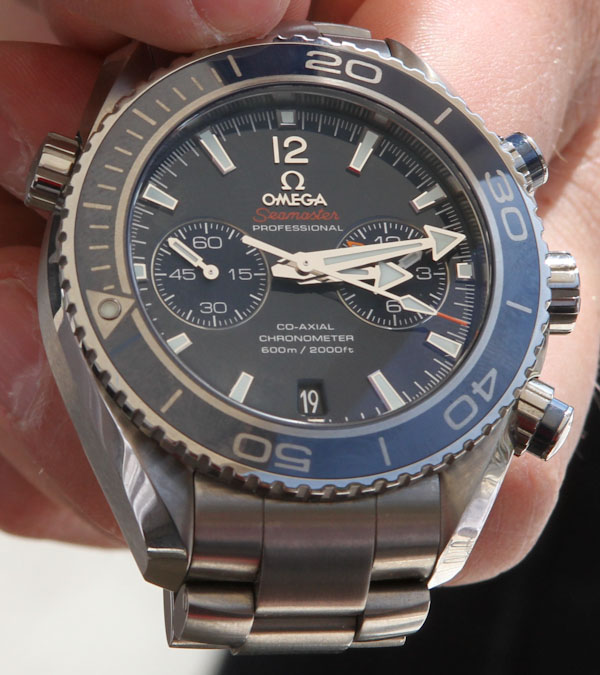
The first and second watches to have Liquidmetal are Seamaster Planet Ocean pieces. The first was a limited edition, the second is not. For 2011 the Seamaster Planet Ocean in blue with has a blue ceramic liquid metal bezel. Omega by the way, must also produce the ceramic material.
Looking At Liquid Metal Watches With Omega   omega

Looking At Liquid Metal Watches With Omega   omega

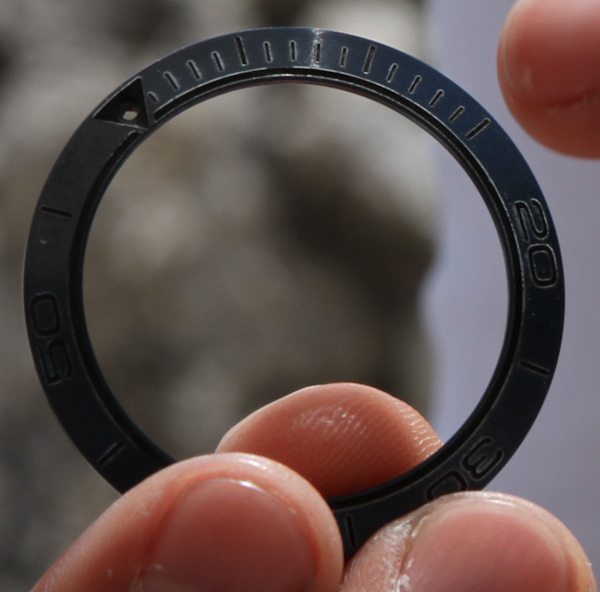
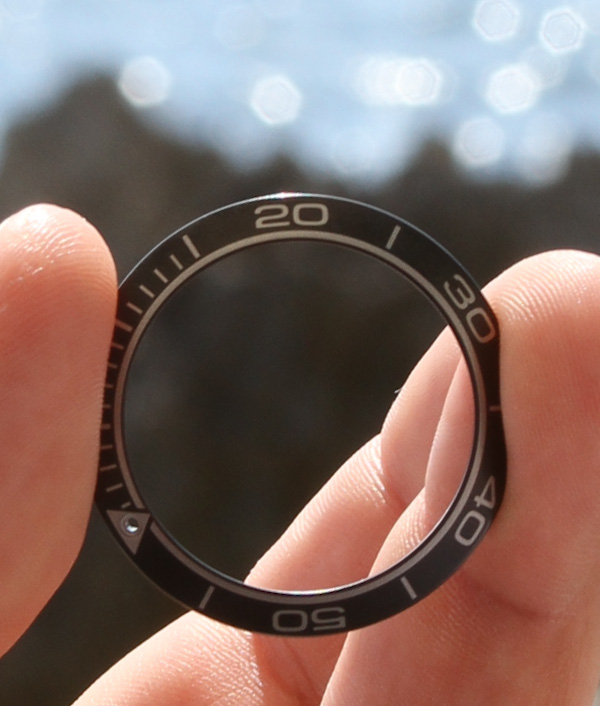
A completed Liquidmetal bezel is ceramic with Liquidmetal filled in to display the Arabic numerals and markers on the diver’s 60 minute scale. Omega was kind enough to have one of their technical people explain the process complete with examples of the process. As this was explained to me, I quickly realized what a pain in the ass industrializing the process of creating these bezels must be. Omega hopes to use Liquidmetal for other watch components in the future. They hope this will include dials, possibly cases, and elements of the movements.

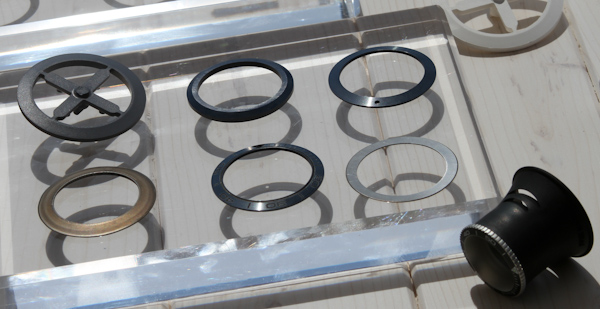
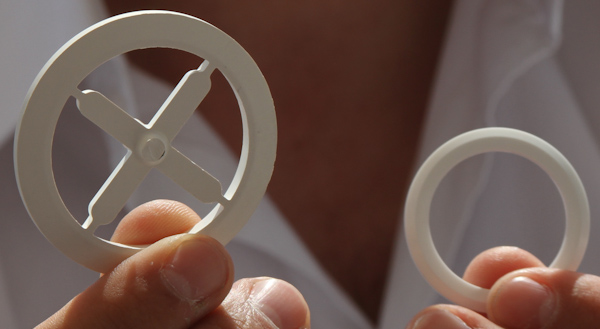
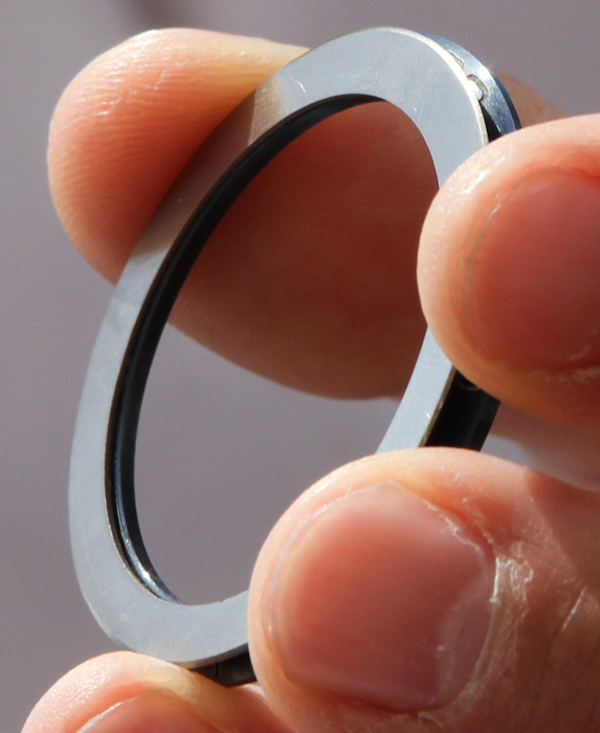
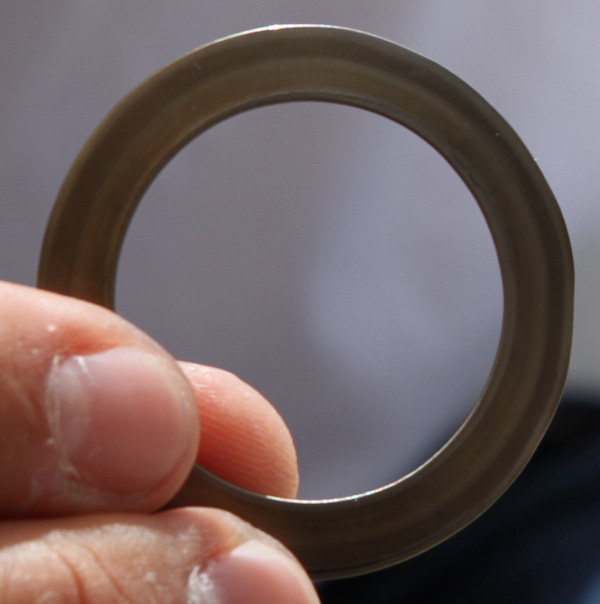
Creating a Liquidmetal bezel starts by creating the ceramic base part. Omega currently makes black, blue, and white ceramic bezels. They are working on orange of course, but they don’t quite have the color down. To create a ceramic bezel a zirconium oxide and plastic ring is created. Plastic is what actually gives the ring its color, but the plastic itself is removed in the process. These initial rings look like little wheel complete with four spokes. They are baked at temperatures of over 1000 degrees. This baking process shrinks them and removes all the plastic particles. What is left is a smaller, colored ring of smooth ceramic.
Looking At Liquid Metal Watches With Omega   omega

Looking At Liquid Metal Watches With Omega   omega

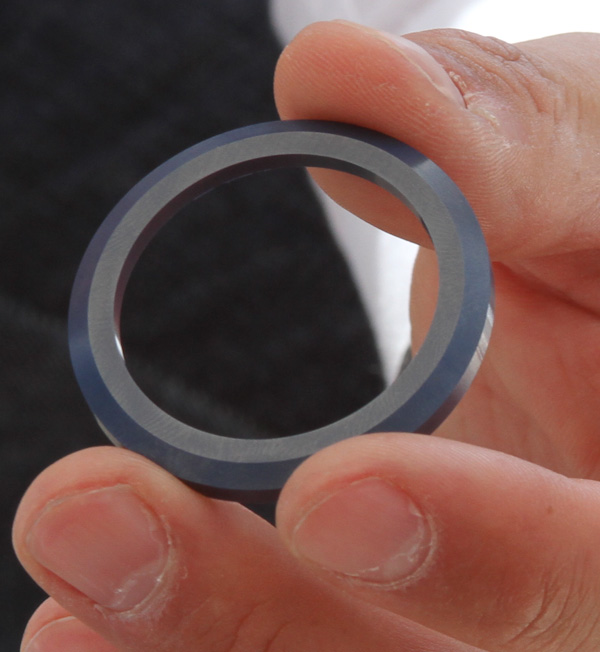
The ring is then cut and shaped into the bezel insert. Most bezels are inserts that fit into the rotating bezel mechanism. The colored ceramic ring is carefully cut and then polished. Ceramic is very hard so cutting them is a slow and difficult process. The next step is to engrave the bezel markers and numerals. This is done with a special laser engraver. According to Omega it takes about 15 minutes to engrave just one bezel with the laser. At this point you have a perfectly shaped ceramic bezel with the indicators engraved into its surface.

Now it comes time for the Liquidmetal. Omega cuts a thin, flat ring of Liquidmetal that is placed over the ceramic bezel and is literally compressed into it using a special pressure and heating process. According to Omega the cost of this small part is about $50 alone. This part of the production results in what is humorously the ugliest piece of the process. A bezel with metal melted over it. At this point Omega performs what is the most magical part of the process, and why the Liquidmetal is so important. While the Liquidmetal appears to cover the bezel, it also has seeped into the laser-cut engravings. Because the ceramic and Liquidmetal have different melting temperatures and behaving differently to polishing — Omega can literally polish off the excess Liquidmetal and retain the finish on the ceramic without damaging it.
Looking At Liquid Metal Watches With Omega   omega

A completed ceramic and Liquidmetal dial has strength, durability, and wear-free colors. It also looks pretty darn cool (click here for more on this Seamaster Planet Ocean Liquidmetal watch). The logical question people keep asking is, “will Omega offer Liquidmetal bezels with all of their watches?” Omega would like to say yes, but the process is still too new to promise such mass adoption. For now Omega is focusing on offering Liquidmetal dials on as many Seamaster Planet Ocean watches as possible. In 5-10 years from now it is hard to tell how widely it will be used within their product range.

About Ariel Adams

Owner & Editor-In-Chief of aBlogtoWatch (formerly known as aBlogtoRead.com) - the world's largest and most popular wrist watch blog. Ariel Adams also regularly contributes to other important media such as Forbes, Departures, Centurion, Tech Crunch, and more.

About the Author

, , , ,

25 comments
metal inserts
metal inserts

I can say this is one the best ever, The metal insert with the accuracy needs the powerful and experienced manufactures, the photo's shows all the beautiful watches and metals this is what we call it as perfect post.

Dennis
Dennis

Is there anything better? What a gorgeous timepiece.

Marc
Marc

I will say this as the proud owner of a LiquidMetal 42mm Planet Ocean (the limited edition one)--this is my day to day watch, and I wouldn't wear anything else. I've banged it into metal doors, even dropped it on concrete once, and not even a scratch on the bezel. It still looks, if I give it a quick wipe with a cloth, like the first moment I saw it in the showroom. Wish I could say the same about the bracelet....

Marc
Marc

I will say this as the proud owner of a LiquidMetal 42mm Planet Ocean (the limited edition one)--this is my day to day watch, and I wouldn't wear anything else. I've banged it into metal doors, even dropped it on concrete once, and not even a scratch on the bezel. It still looks, if I give it a quick wipe with a cloth, like the first moment I saw it in the showroom. Wish I could say the same about the bracelet....

anthony
anthony

I don't think the question for everyone is if it'll be on new watches, it's: Can I buy it for *my* Planet Ocean??

Etallee
Etallee

Very cool material. LiquidMetal has been around for some time and has also been used in other consumer goods (ie golf clubs) and concepts. Check out the Tag Heuer Microtimer concept watch and Vertu Ascent circa 2004. The one key advantage LiquidMetal has is it can be cast into precision parts with very intricate details. I am surprised that we have not seen earlier and more widespread use in the watch industry. Cost is certainly the main driver.

Tuck
Tuck

Omega, aka Swatch. LOL. Not too exclusive...

Tuck
Tuck

Omega, aka Swatch. LOL. Not too exclusive...

Shappy
Shappy

" It may appear that brands are hot on beating each others' movements but they know that such a war would be a joke. The race for the most accurate movement slowed to almost a halt when quartz watches hit the scene, and there are almost no new viable complications to be invented. "

Lest we forget about Seiko's excellent, and super accurate, Spring Drives? Have the Swiss watchmakers conceded defeat?

I say this as the proud owner of a Planet Ocean, so please don't label me a hater, but I would love to know why we have not seen more movement accuracy innovation.

Ulysses
Ulysses

I think it's because the Swiss makers believe they can coast along relying on their illustrious heritage and brand snobbery. Disregard the fact that Seiko has probably the longest unbroken watch-making history on Earth. The Spring Drive movement is without doubt a great movement, but a lot of people dismiss it because of the quartz regulator. As a result they don't consider it a "pure" mechanical watch. I see it more as a complete mechanical watch with extras. The quartz system only adjusts the rate at which the hands move to maintain accuracy, but I think this is too much of a hurdle for traditional watch lovers.

Chris
Chris

Longest unbroken watch-making history? Really? Not even close.

Also, the escapement is a quartz mechanism, so it's really not a mechanical movement with extras. It's a quartz movement with extra mechanical parts, which is like putting your bike in the back of your car and telling everyone you rode to work.

Chris
Chris

What do you think the quartz does in a quartz movement? It sure as hell doesn't power the watch.

Is the spring drive technologically impressive? Yes. And?

Ulysses
Ulysses

Well, 1881 isn't that recent, and while it isn't the oldest, it certainly has a long history that hasn't been interrupted by closures and take-overs like many Swiss brands. As for the lack of an escapement, that's a pretty spurious argument and one that I predicted someone would use. An escapement in the traditional sense is superfluous when the the release of mechanical energy in the spring is regulated by other means. Still, there has to be a direct mechanical link from the power-source to the hands. It's only the rate at which that energy is expended that is regulated. Without it the watch would still work, just not accurately. Your metaphor is therefore inaccurate. You imply that like the bike, the mechanical parts sit idly by doing nothing while the quartz system does all the work- this is bullshit. A watch consisting of nearly 500 parts is quite a feat of engineering and shouldn't be dismissed so readily.

Shappy
Shappy

" It may appear that brands are hot on beating each others' movements but they know that such a war would be a joke. The race for the most accurate movement slowed to almost a halt when quartz watches hit the scene, and there are almost no new viable complications to be invented. " Lest we forget about Seiko's excellent, and super accurate, Spring Drives? Have the Swiss watchmakers conceded defeat? I say this as the proud owner of a Planet Ocean, so please don't label me a hater, but I would love to know why we have not seen more movement accuracy innovation.

Ulysses
Ulysses

I think it's because the Swiss makers believe they can coast along relying on their illustrious heritage and brand snobbery. Disregard the fact that Seiko has probably the longest unbroken watch-making history on Earth. The Spring Drive movement is without doubt a great movement, but a lot of people dismiss it because of the quartz regulator. As a result they don't consider it a "pure" mechanical watch. I see it more as a complete mechanical watch with extras. The quartz system only adjusts the rate at which the hands move to maintain accuracy, but I think this is too much of a hurdle for traditional watch lovers.

Chris
Chris

Longest unbroken watch-making history? Really? Not even close. Also, the escapement is a quartz mechanism, so it's really not a mechanical movement with extras. It's a quartz movement with extra mechanical parts, which is like putting your bike in the back of your car and telling everyone you rode to work.

Chris
Chris

What do you think the quartz does in a quartz movement? It sure as hell doesn't power the watch. Is the spring drive technologically impressive? Yes. And?

Ulysses
Ulysses

Well, 1881 isn't that recent, and while it isn't the oldest, it certainly has a long history that hasn't been interrupted by closures and take-overs like many Swiss brands. As for the lack of an escapement, that's a pretty spurious argument and one that I predicted someone would use. An escapement in the traditional sense is superfluous when the the release of mechanical energy in the spring is regulated by other means. Still, there has to be a direct mechanical link from the power-source to the hands. It's only the rate at which that energy is expended that is regulated. Without it the watch would still work, just not accurately. Your metaphor is therefore inaccurate. You imply that like the bike, the mechanical parts sit idly by doing nothing while the quartz system does all the work- this is bullshit. A watch consisting of nearly 500 parts is quite a feat of engineering and shouldn't be dismissed so readily.

Eric
Eric

Owning an Omega with a co-axial movement appeals to me as I can wear my watch for years and not worry about getting it serviced (and I have!). Now that Omega will use nearly indestructible materials, I am doubly impressed. After all, what is the point of shelling out that much money when you have to take it into for maintenance or worry about banging it on something by accident? There are higher-end brands that look great to the eye, but I would seriously be worried about wearing considering my lifestyle. In a year or two, I may be the proud owner of a second Omega. :-)

Eric
Eric

Owning an Omega with a co-axial movement appeals to me as I can wear my watch for years and not worry about getting it serviced (and I have!). Now that Omega will use nearly indestructible materials, I am doubly impressed. After all, what is the point of shelling out that much money when you have to take it into for maintenance or worry about banging it on something by accident? There are higher-end brands that look great to the eye, but I would seriously be worried about wearing considering my lifestyle. In a year or two, I may be the proud owner of a second Omega. :-)

kris c
kris c

Very cool, and now that I better understand what's involved, I can better appreciate the application.

As with my first introduction to liquidmetal, my main 'gripe' would be that you don't look at it and know right off that it is something special, as a casual observer. You could tell most that it is just vanilla steel and they wouldn't blink. Not that this is a dealbreaker by any stretch, just something to consider. We'll end up seeing beautifully coloured liquidmetal, mark my words.

Simeon Weinraub
Simeon Weinraub

I think the point is not what it looks like to the casual observer, but how it performs over time. That after years of use, the bezel should still in basically the same shape and condition it was when it was new is kind of awesome.

kris c
kris c

Very cool, and now that I better understand what's involved, I can better appreciate the application. As with my first introduction to liquidmetal, my main 'gripe' would be that you don't look at it and know right off that it is something special, as a casual observer. You could tell most that it is just vanilla steel and they wouldn't blink. Not that this is a dealbreaker by any stretch, just something to consider. We'll end up seeing beautifully coloured liquidmetal, mark my words.

Simeon Weinraub
Simeon Weinraub

I think the point is not what it looks like to the casual observer, but how it performs over time. That after years of use, the bezel should still in basically the same shape and condition it was when it was new is kind of awesome.

Trackbacks

  1. [...] Metal bezels Here's a cool little diddy describing the LM bezel process from aBlogToRead.com: http://www.ablogtowatch.com/looking-a…es-with-omega/ "If we weren't meant to eat animals, then why are they made of meat?" [...]

  2. [...] ABlogtoRead.com has a fantastic article of Ariel Adams looking at the Liquid Metal process: http://www.ablogtowatch.com/looking-a…es-with-omega/ Reply With Quote + Reply to Thread « Previous Thread [...]

  3. [...] Looking At Liquid Metal Watches With Omega The modern arms race with watches isn’t about gears and pinions, but rather materials. It may appear that brands are hot on beating each others’ movements but they know that such a war would be a joke. The race for… [...]

  4. [...] make which is not that much compared to the price of the watch. Here is the link to that article. Omega Liquidmetal Watches Current: Omega Planet Ocean 2201.51 2500D, Citizen Calibre 2100 Ti Sapphire(AV0020-55H) [...]

  5. [...] chronograph models with a new type of "Ceragold" bezel. Ceragold is more or less the gold version of Liquidmetal (that I discussed in more detail here). It is a special process that Omega uses to inset gold in the engraved ceramic bezel. In a sense, [...]